

Tooth Removal in Torquay




Do you need atooth removed?
Removing a tooth is a decision we take carefully, and only once the alternatives have been considered. Where a tooth is broken beyond repair, severely decayed, loose from gum disease, or causing problems for the teeth around it, taking it out is sometimes the most sensible course.
Routine extractions are carried out by Dr Ed Streamer (GDC: 277834) and Dr Lin Little (GDC: 107313). More involved cases — teeth that have broken at the gum line, roots that need surgical access, and wisdom teeth — are carried out by Dr Andrew Rochester (GDC: 244709), who holds an MSc in Periodontology and undertakes the full range of extractions at the practice.
That means most patients can have the tooth removed here in Torquay rather than being referred on to a hospital. We will tell you at assessment which category your tooth falls into and what it will cost before anything is booked.


Alternatives to consider first
ReplacingMissing Teeth
Once a tooth has been removed, the bone that held it begins to shrink. Where the gap is to be filled with an implant, the best window to begin is around eight weeks after the extraction — after that, the reducing bone level can make treatment more involved.
Not every gap needs filling. A back tooth at the end of the arch may need nothing at all, while a gap in the visible part of your smile usually does. We will set out the options — implant, bridge, denture, or leaving it — and what each involves, so you can decide with the full picture.


Does a tooth extraction hurt?
The tooth and the area around it are numbed with local anaesthetic before we begin, so you should not feel pain during the extraction itself. What you will feel is pressure and movement, which can be surprising if you are not expecting it — the tooth is being eased out rather than pulled, and that takes firm, steady force. Tell us at any point if you are uncomfortable and we can add more anaesthetic. Afterwards, it is normal for the area to be sore for several days as the socket heals. Over-the-counter pain relief is usually enough. If the pain worsens after two or three days rather than settling, call us — that can indicate a dry socket, which is easily treated but needs seeing.
How long does it take to recover from a tooth extraction?
Most people feel substantially better within three to four days, with the socket closing over across one to two weeks and the bone underneath continuing to fill in for a few months. A straightforward extraction usually means little more than a quiet evening. A surgical or wisdom tooth extraction more often involves swelling that peaks around day two or three, and it is sensible to keep the following day clear where you can. Recovery is quicker if you avoid smoking, do not rinse vigorously for the first 24 hours, and keep to softer food on the opposite side while the area settles.
How much does a tooth extraction cost in Torquay?
At WB Dental, an extraction is £250, and if you are new to the practice your first appointment is an oral health assessment at £110, charged separately. A complex extraction, where the tooth is broken down or has awkward roots, is £450. A surgical extraction, where access is made through the gum, is £650. Wisdom teeth are £750. Patients on one of our membership plans receive 10% off all of these. Which fee applies depends on how the tooth comes out rather than which tooth it is, and we can only tell you for certain after examining it and taking a radiograph. What we can tell you is that the fee will be confirmed before any treatment is booked — you will not be given one figure and charged another.
What should I do straight after having a tooth out?
Bite firmly on the gauze pad for at least 20 minutes without checking it — steady pressure is what allows the clot to form. Once bleeding has stopped, leave the area alone. For the first 24 hours, avoid rinsing, spitting, hot drinks, alcohol and strenuous activity, all of which can dislodge the clot. Do not smoke, ideally for several days: smoking is the single biggest cause of dry socket. Eat softer food on the other side, and keep brushing the rest of your mouth normally. From the following day, rinsing gently with warm salt water after meals helps keep the socket clean. If bleeding restarts and does not settle with 20 minutes of firm pressure on fresh gauze, call the practice.
Our Treatments, Your Smile
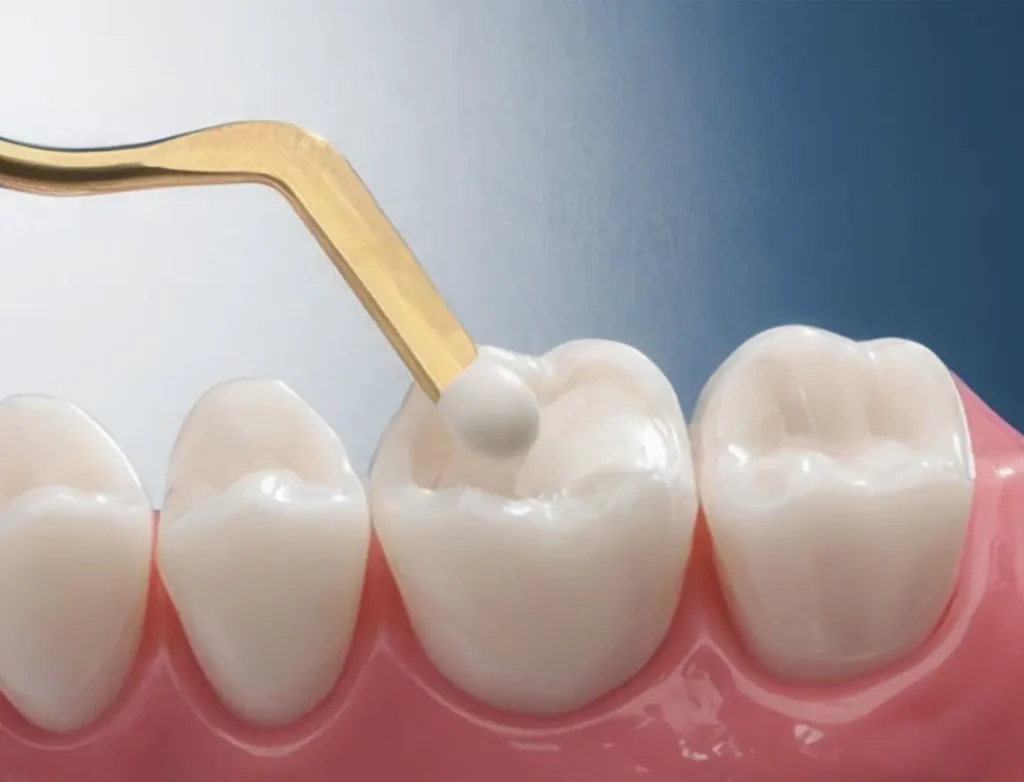
Restore your smile naturally with strong, discreet white fillings—seamless protection for a healthier, brighter smile!
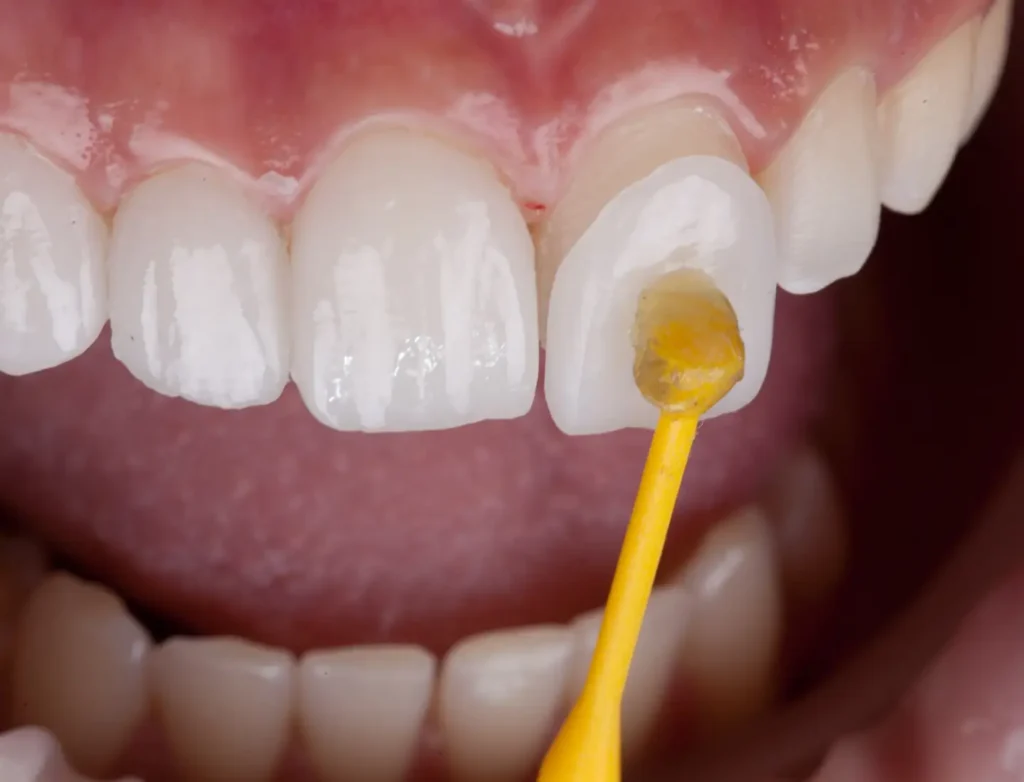
Custom-made shells—typically made of porcelain or composite resin—which are bonded to the front of teeth…

Treatment that relieves the pain of an infected tooth — and saves the tooth rather…